

Culture on the Ha Giang Loop (2025–2026): The Complete Cultural Travel Guide + Bong Hostel’s Culture Tour

If you’ve heard the rumours—yes, they’re true. The Ha Giang Loop is changing fast. Some roads are smoother, restaurants are busier, and certain photo spots now have more tripods than trees.
But here’s the good news: the culture hasn’t gone anywhere.
Ha Giang is still one of the most culturally rich, ethnically diverse, and spiritually layered regions in all of Vietnam. You just need to know where to look… and more importantly, how to look.
That’s where Bong Hostel’s Culture Tour comes in—designed for travellers who don’t want to zoom past the good stuff.
Instead of racing along the highway with a GoPro and a dust moustache, you’ll explore local villages, markets, rituals, handicrafts, and everyday life with guides who grew up here and actually know what they’re talking about.
But before we get into that, let’s break down everything you need to know about culture on the Ha Giang Loop.
ⓒ Claire ThomasWhat is the Culture Tour: How it Works
Think of it as the best Ha Giang Loop tour for culture. The classic route’s quieter sibling: designed for travellers who want the scenery and the stories behind the scenery.
Duration:
3 days, 2 nights — a slower, more immersive version of the Ha Giang Loop.
Starting Point:
All Ha Giang Loop tours begin at Bong Hostel Ha Giang with a full briefing, before you meet your guides and Easy Riders.
You can get here from Bong Hanoi Hostel or other destinations across Northern Vietnam.
Related article: Everything You Need to Know About Getting the Bus to Ha Giang for the Ha Giang Loop.
Who It’s For:
Travellers who want the Loop without the chaos—slower pace, deeper culture, fewer crowds, and ethical interactions with local communities.
Ideal for solo travellers, couples, and anyone who prefers meaningful experiences over rush-and-repeat backpacker tours.
What to Expect:
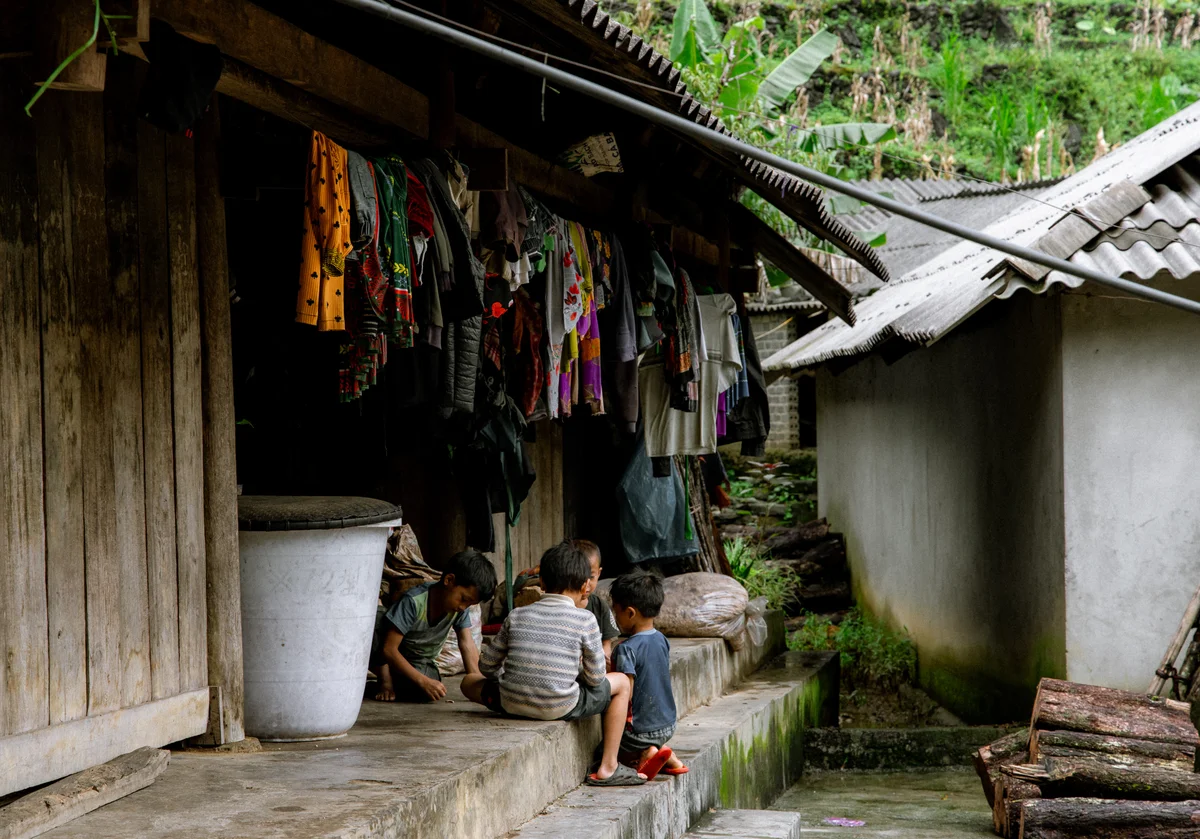
A carefully selected slow route through Tay, Hmong, and Dao villages, time inside real homes and workshops, expert cultural breakdowns at every stop, small groups, safer speeds, and no tourist traps.
It’s the Ha Giang Loop—just done respectfully, calmly, and with purpose.
 ⓒ Claire Thomas
Ethnic Groups of the Ha Giang Loop: Who You’ll Meet in 2025–2026
With over 19 ethnic groups, Ha Giang is basically Vietnam’s cultural Avengers.
Each group has its own language, festivals, clothing, cuisine, farming style, architecture, and worldview.
And the best part? Most communities still live the same way their families did generations ago.
Here’s your quick-fire overview of the main ethnic minority groups you’ll encounter:
Ethnic Group
Where You’ll See Them
Cultural Highlights
Hmong
Dong Van, Meo Vac, Quan Ba
Hemp weaving, indigo dye, silver jewellery, Khen flute, terraced corn fields
Tay
Yen Minh, Ha Giang City
Stilt houses, folk songs (then), bamboo crafts
Dao (Red Dao & Dao Ao Dai)
Quan Ba, Hoang Su Phi
Embroidery, herbal medicine, spiritual rituals, fire dancing
Giay
Dong Van, Meo Vac
Rice farming, colourful festivals
Lo Lo
Lung Cu
Patchwork clothing, clay houses, traditional percussion
Pu Peo
Meo Vac
Distinct clothing, rare rituals, ancient musical instruments
The variety is incredible. In just one day, you might see:
Clay-walled Hmong houses.
Tay stilt houses.
Lo Lo clay homes with wooden beams.
Dao villages with red scarves drying on balconies.
Giay communities tending rice paddies.
This is real life, not a staged performance—and it’s exactly what Bong Hostel’s Culture Tour is designed to highlight.
Related article: Discover 9 Must-Visit Local Ethnic Villages on the Ha Giang Loop (Plus 1 Secret Village with Bong Hostel).
 ⓒ Claire Thomas
Ha Giang Loop Culture Breakdown: Food, Handicrafts & Daily Life
To really understand culture on the Ha Giang Loop, it helps to break down the core elements of everyday life.
Ha Giang Handicrafts
In Ha Giang, handicrafts aren’t cute souvenirs—they are the backbone of cultural identity.
1. Hemp Weaving (Hmong)
Hemp is planted, harvested, stripped, dried, spun, woven, dyed, and stitched by hand.
ONE traditional outfit takes months to complete.
The patterns represent protection, spiritual beliefs, and clan identity.
2. Embroidery (Hmong & Dao)
Not just decoration—each symbol has meaning.
Embroidery skills are traditionally taught from mother to daughter.
3. Bamboo & Rattan Weaving (Tay & Giay)
Baskets, rice sifters, fish traps, even walls and roofs.
You’ll walk through villages where entire families work together.
4. Silver Jewellery (Hmong)
Worn for beauty AND spiritual protection.
Each piece is handmade using traditional carving, melting, and moulding techniques.
On Bong’s Culture Tour, your guide explains the stories behind each craft rather than just pointing and saying, “Look! Basket.”
Traditional Ethnic Clothing
Each ethnic group wears distinct clothing packed with symbolism.
Hmong
Pleated skirts
Embroidered jackets
Elaborate silver jewellery
Bright headscarves
Related article: Hmong New Year 2025 in Ha Giang: Dates, Traditions & Guide.
Dao
Red Dao wear striking headdresses with pompoms, silver coins, or tassels
Heavy embroidery often featuring floral motifs
Beaded accessories
Lo Lo
Iconic geometric patchwork
Deep black or bright white outfits
Traditional wooden and bronze instruments
Tay
Simple, elegant indigo garments
Minimal embroidery
Practical but meaningful
You’ll see locals wearing traditional dress daily—not just for tourists' benefit.
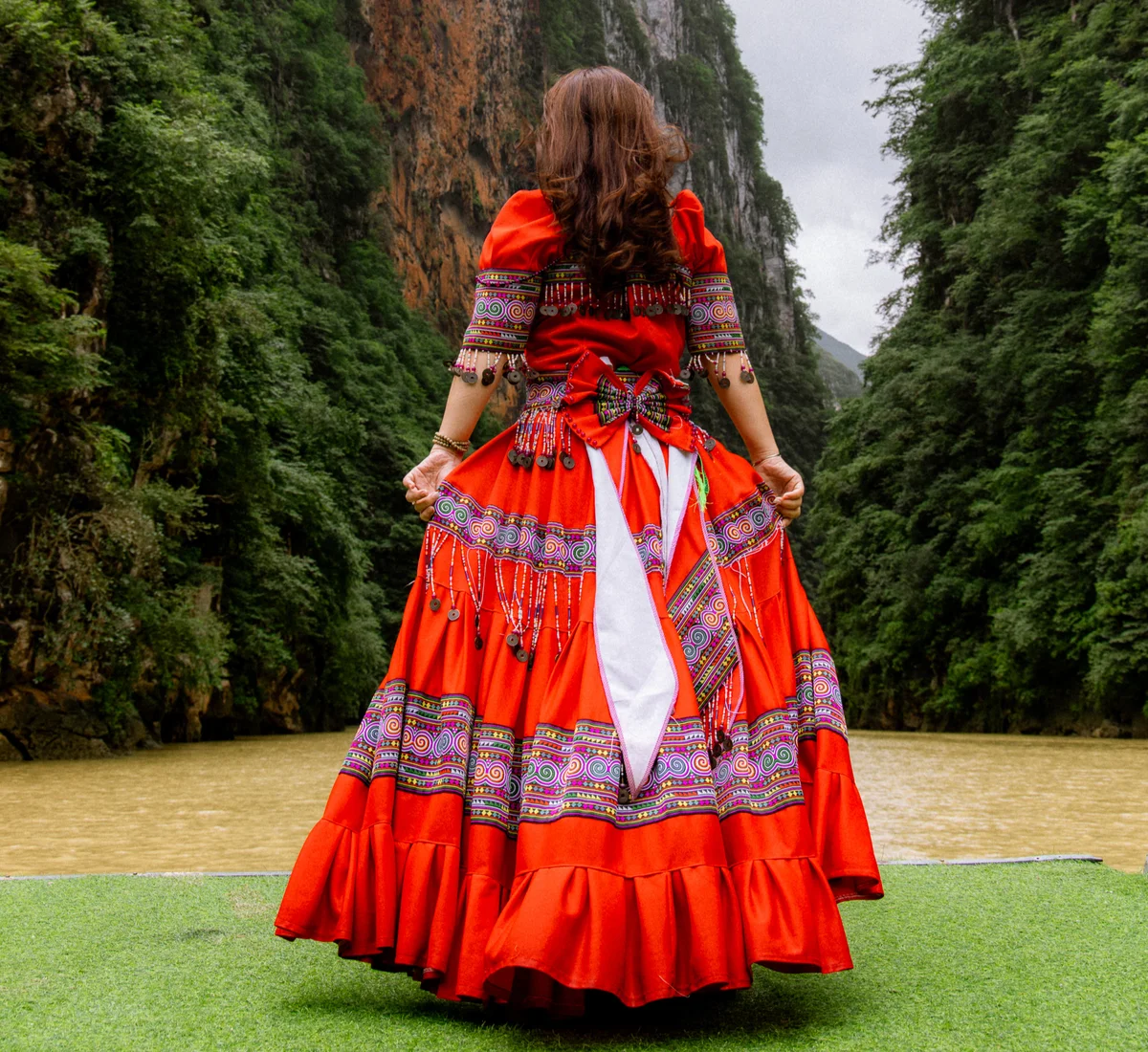 Traditional Ethnic Clothing on the Ha Giang Loop | ⓒ Claire Thomas
Traditional Foods in Ha Giang
Traditional Ha Giang food is seasonal, home-grown, and meant to be shared.
Popular dishes include:
Men men (steamed corn powder).
Buckwheat cake.
Thang co (traditional festival dish, although not advised for tourists).
Five-color sticky rice.
Home-brewed corn wine.
Your guide will explain what each dish represents and when it’s traditionally eaten. Guests can even sample men men and home brewed corn wine during our Culture Tour!
Related article: Food on the Ha Giang Loop: A Vegan & Allergy-Friendly Guide.
Music & Instruments
Music is central to festivals, rituals, ancestor worship, and even courtship.
Khen flute (Hmong).
Dan tinh (Tay).
Lo Lo percussion drums.
Bronze bells and wooden percussion instruments.
Every village has its own soundscape, and your Ha Giang Loop tour leader explains them all in real time—so you don’t just hear music, you understand it.
Farming & Family Life
Ha Giang culture is built on the land. Families grow what they eat, weave what they wear, and build what they live in.
Families grow corn, rice, herbs, buckwheat, working together as one unit.
Hmong homes use clay walls and wood frames to stay warm in winter.
Tay families build stilt houses perched above streams and rice fields.
Festivals follow harvest cycles.
Buffalos are used to plough the fields.
Community gatherings revolve around family clans.
These traditions have existed for generations—and continue today.
 ⓒ Claire Thomas
Ha Giang Festivals 2026: Cultural Calendar
Ha Giang’s culture comes alive most vividly during its traditional festivals—moments when ethnic minority communities gather, celebrate, honour ancestors, and strengthen the social bonds that define life in the mountains.
If your timing lines up, these events offer one of the most authentic cultural windows you’ll find anywhere in Vietnam.
1. Hmong New Year (Nov → Dec)
Celebrated earlier than Vietnamese Tet, marking the end of the harvest.
Expect handmade clothing, khen flute dances, pao (cloth ball) games, feasts, and busy village markets.
Related article: Hmong New Year 2025 in Ha Giang: Dates, Traditions & Guide.
2. Gau Tao Festival (Late Dec → Early Jan)
A major Hmong celebration blending spiritual rituals with cultural competitions—khen dancing, martial arts, crossbow contests, horse racing, and traditional games.
3. Khen Festival (Late Dec → Early Jan)
Dedicated to the Hmong bamboo khen flute.
Expect dramatic performances where dancers jump, flip, and move rhythmically while playing.
4. Buckwheat Flower Festival (Oct → Nov)
This is northern Vietnam’s most photogenic festival, celebrating the blooming of the famous pink buckwheat flowers that cover Ha Giang’s valleys.
5. Khau Vai Love Market (3rd Lunar Month)
An annual gathering where past lovers reunite, and young people meet new partners through singing, dancing, and traditional courtship customs.
6. Mid-Autumn Festival (September)
Children’s lantern parades take on a unique mountain style, with handmade star lanterns, drumming, and community gatherings.
Related article: Everything You Need to Know about Vietnam’s Mid-Autumn Festival.
7. Long Tong Festival (Jan → Feb)
The Tay people’s “Going to the Field” festival.
Includes: prayers, folk singing, lion dances, offering rituals, and rice wine (Happy water).
8. Traditional Lunar New Year – Tet (Jan → Feb)
Tet Holiday in Ha Giang is quieter and more traditional than in the cities.
Families perform ancestral rituals, cook regional dishes, give lucky money, visit shrines, and celebrate with lion dances and colourful markets.
And of course there are many more within each ethnic minority community!
Related article: Festivals in North Vietnam 2025: A Guide on Celebrations, Culture, and Chaos.
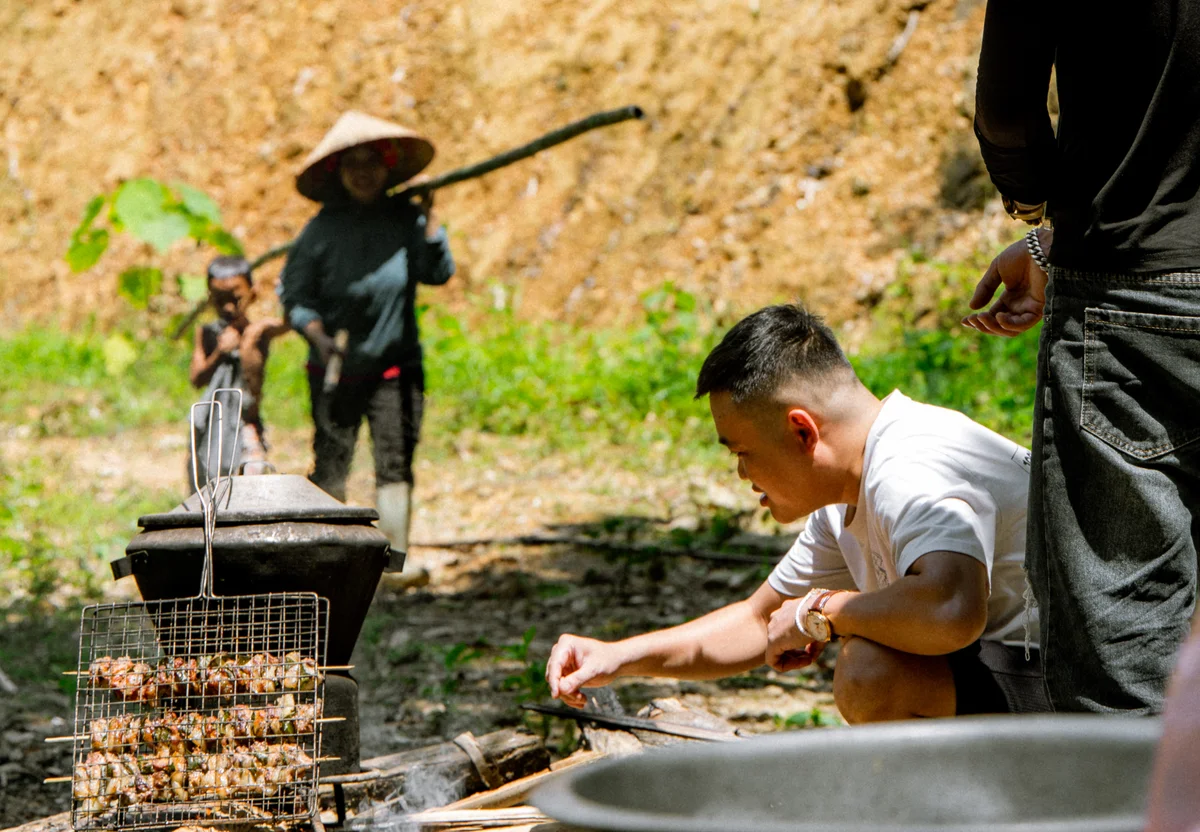 ⓒ Claire Thomas
Cultural Etiquette on the Ha Giang Loop (Respectful Travel Guide)
Bong Hostel has been operating since 2016—and from day one, responsible tourism was a core priority.
Here’s how to be a respectful traveller on the Culture Tour:
✔️ Ask before taking photos
Many communities value consent and privacy.
✔️ Dress modestly in villages
Shoulders and knees covered is best.
Related article: What Not to Wear on the Ha Giang Loop | Responsible Travel Guide.
✔️ Don’t enter homes without invitation
Some groups consider it spiritually disrespectful.
✔️ Do not give sweets or money to children
This encourages unhealthy, long-term dependency.
Related article: Ethical Travel in Vietnam: Why You Shouldn't Give Money to Children on the Ha Giang Loop.
✔️ Respect altars, clan houses, and sacred sites
Clan houses, altars, and ceremonial buildings hold deep meaning.
✔️ Listen to your Easy Rider
If in doubt—follow their lead and ask lots of questions (they really don’t mind!).
Responsible travel protects the traditions that make Ha Giang so special.
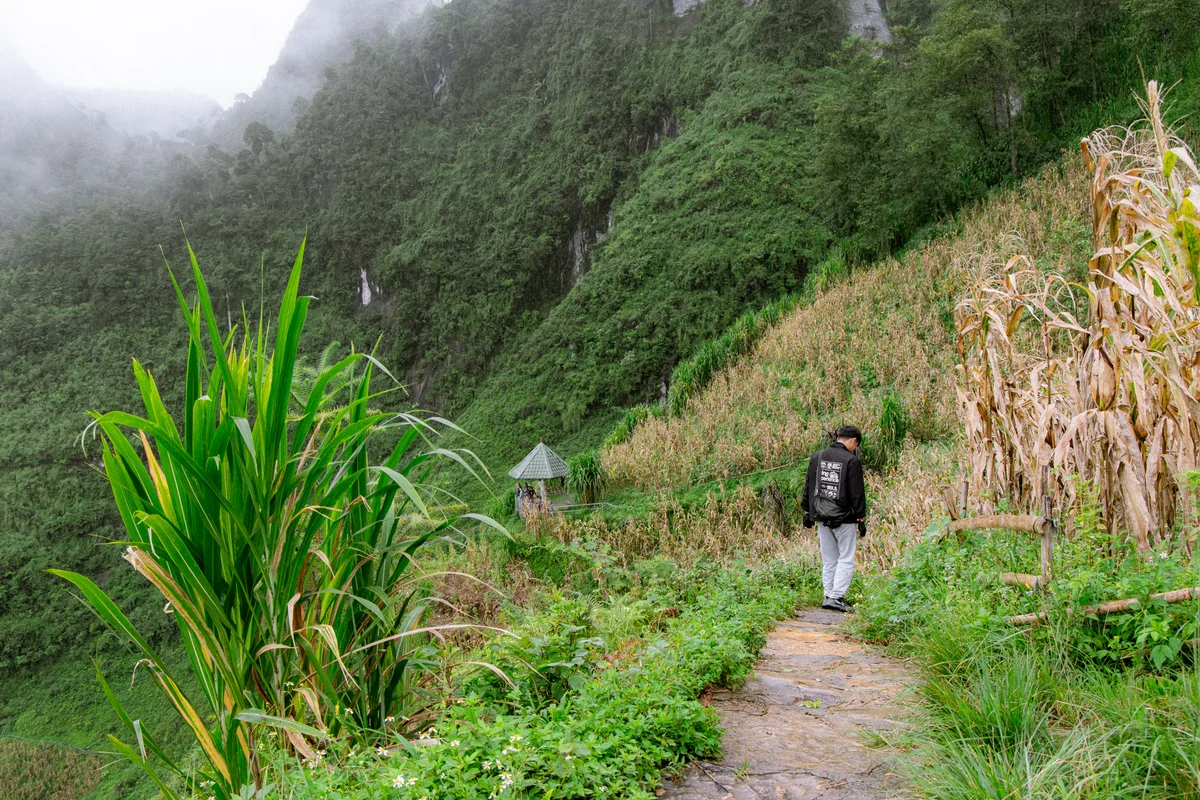 ⓒ Claire Thomas
What You’ll See on Bong Hostel’s Culture Tour
Yes, you can ride the Ha Giang Loop alone.
No, you cannot understand or spot the cultural details by yourself—unless you’re fluent in at least three ethnic minority languages.
Here’s what you’ll actually experience when you do the Loop through Bong’s Culture Tour:
1. Locals drying corn right on the roadside
You’ll learn why corn is everything here—food, wine, income, livestock feed. You may even be able to join in a demonstration of sweeping out the corn to dry, or collecting it in for the evening.
2. Women spinning, twisting, and weaving hemp
You’ll see the full process, from plant to thread to fabric to clothing.
3. Indigo dye workshops
Find out how clothes get that deep blue colour (your hands may go home blue too—initiation complete).
4. Families tending buffalo, goats, and chickens
Agriculture here looks nothing like farming back home—and your guide explains it all.
5. Traditional clan houses and village temples
These are spiritually sacred places you won’t understand without proper context.
6. Handmade textiles, silver jewellery, and bamboo crafts
You’ll learn what patterns mean, why they matter, and what NOT to bargain too low on.
Related article: How to Barter in Vietnam: 20+ Haggling Tips for Travelers.
7. Unique clothing styles in every valley
Once you know what’s what, you’ll start spotting cultural differences everywhere.
This isn’t a “drive-by” culture experience. This is slow, meaningful, respectful travel—something that only works with trained local guides… and something bong hostel has been specialising in since 2016.
Here’s the thing: Not all tours are created equal.
Some Loop tours focus on speed.
Some focus on nightlife.
Some treat culture like a side dish.
Bong Hostel’s Culture Tour treats culture as the main course.
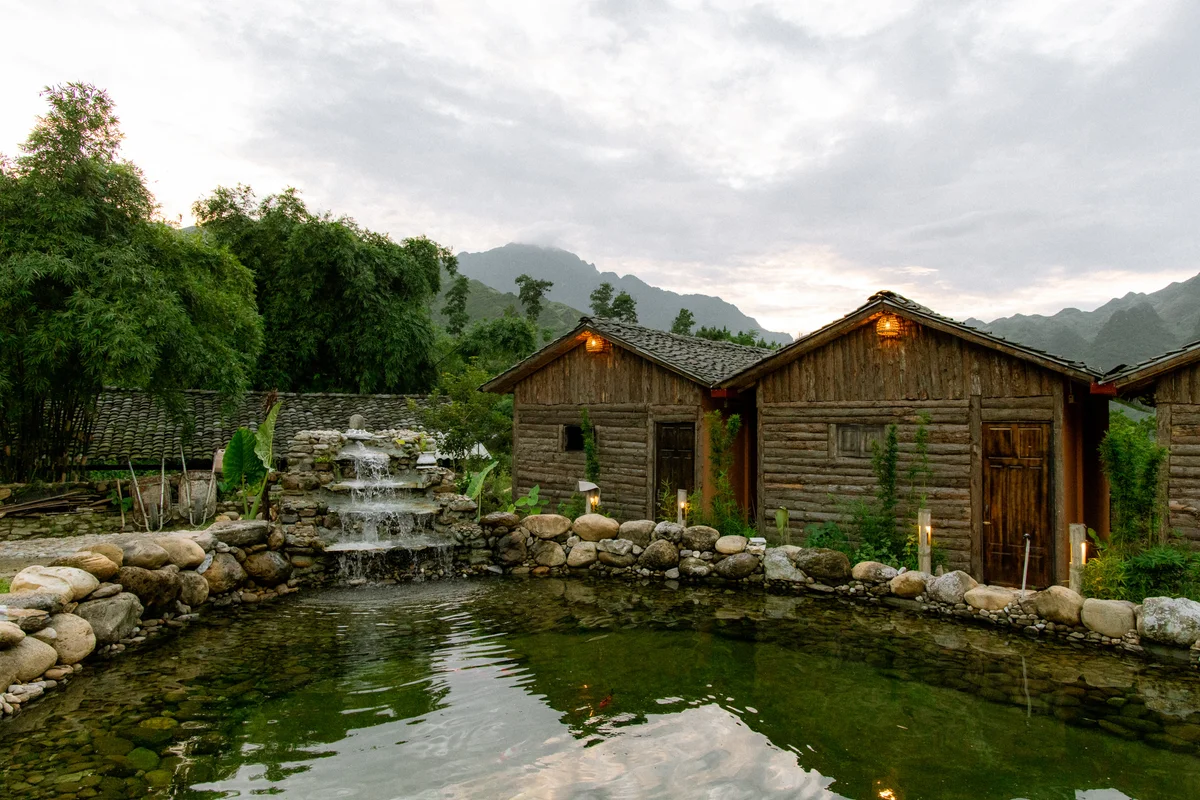 ⓒ Claire Thomas
Why Bong Hostel’s Culture Tour Is the Best Cultural Experience in Ha Giang
Let’s be honest: the Classic Ha Giang Loop is iconic, chaotic, beautiful, and buzzing. It’s the bucket-list route people rave about in hostel common areas from Thailand to the Phillipines.
But… if you’ve ever thought “I want more than just motorbikes and mountains—I want to actually understand the place I’m travelling through,” then Bong Hostel’s Culture Tour is the tour for you.
Culture Tour Vs Classic Tour
Here’s what makes it different (and why so many travellers say it ends up being the highlight of their entire Vietnam trip):
1. Local Expert Guides (Not Just Drivers)
Our Culture Tour gives you a guide who can actually explain everything you’re seeing.
Many of our guides come from the very villages you’ll visit. They know the stories behind:
Why Hmong skirts are pleated.
Why Tay houses are built on stilts.
Why indigo dye turns your hands blue for three days.
This isn’t trivia—it's a lived experience.
2. A Slower, More Intentional Route
Classic Loop? Amazing, high energy, but fast-paced.
Culture Tour? Slowed down like someone finally hit the “decompress” button.
Instead of driving past villages, you stop, wander, meet people, and actually absorb what’s happening around you.
Expect:
More time with Ha Giang ethnic groups.
More time watching weaving, dyeing, cooking, farming.
Fewer highways and more hidden backroads.
It’s the Loop, but with the volume turned up on culture and turned down on chaos.
Related article: What It’s Really Like to Disconnect on the Bong Hostel Secret Tour (And Why You Totally Should!).
3. Real Homes, Real Workshops, Real Stories
Everything you see is real daily life, exactly as it is—not something performed for tourists.
You visit people who are weaving because they actually weave, cooking because they actually cook, and farming because they actually farm.
It’s authentic without being intrusive—and yes, you’ll be able to feel the difference.
4. Small Groups = Big Connection
Picture this: A group of four travellers sitting in a family kitchen, drinking fresh corn wine and learning how Hmong houses are built.
Now picture this: A convoy of 20 tourists unloading at the same spot.
Exactly.
We keep groups small so you’re not part of a crowd—you’re part of a conversation.
Related article: Is the Ha Giang Loop Too Touristy in 2025? Honest Advice for Backpackers.
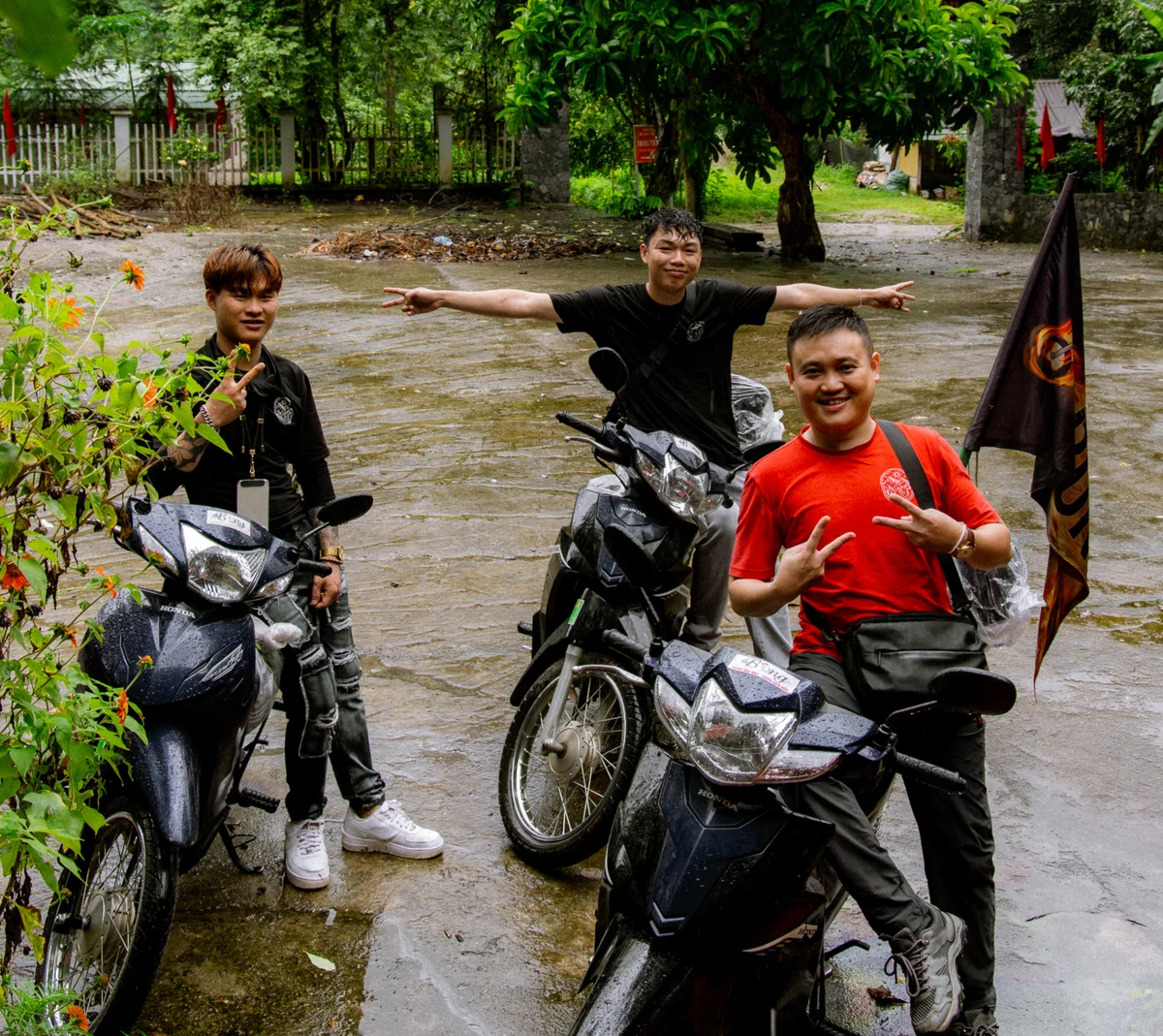 Enjoy Small Groups on Bong Hostel's Culture Tour | ⓒ Claire Thomas
5. Cultural Explanations Woven Into Every Stop
On the Classic Loop, you see interesting things.
On the Culture Tour, you understand them.
Your guide will casually drop knowledge like:
Why Hmong silver jewellery is more than decoration.
How long it actually takes to make one indigo-dyed outfit.
What certain symbols embroidered on jackets mean.
Why corn is dried on roadsides.
How clan houses work.
What’s considered respectful vs taboo.
You leave with stories—not just photos.
Related article: Understanding the Different Ethnic Groups on the Ha Giang Loop.
6. Direct Community Support (This Matters More Than You Think)
This tour isn’t built around tourist traps. It’s built around partnerships with local families.
Your visit directly supports:
Small craft groups.
Village markets.
Local workshops.
Local teachers and elders.
Community-run homestays.
It’s tourism that doesn’t take—it gives back.
And yes, we’re picky. If a place doesn’t treat its people fairly or stages experiences, we don’t go there.
Related article: Bong Hostel Ha Giang Loop Charity Tour 2025 | Ethical Travel Vietnam.
7. An Ethics-First Approach
(One of the Core Reasons Travellers Choose Us)
Our guiding principle is simple:
If an activity disrespects local culture, we don’t do it. Ever.
That means:
No entering homes without permission.
No disrupting rituals.
No staged or artificial interactions.
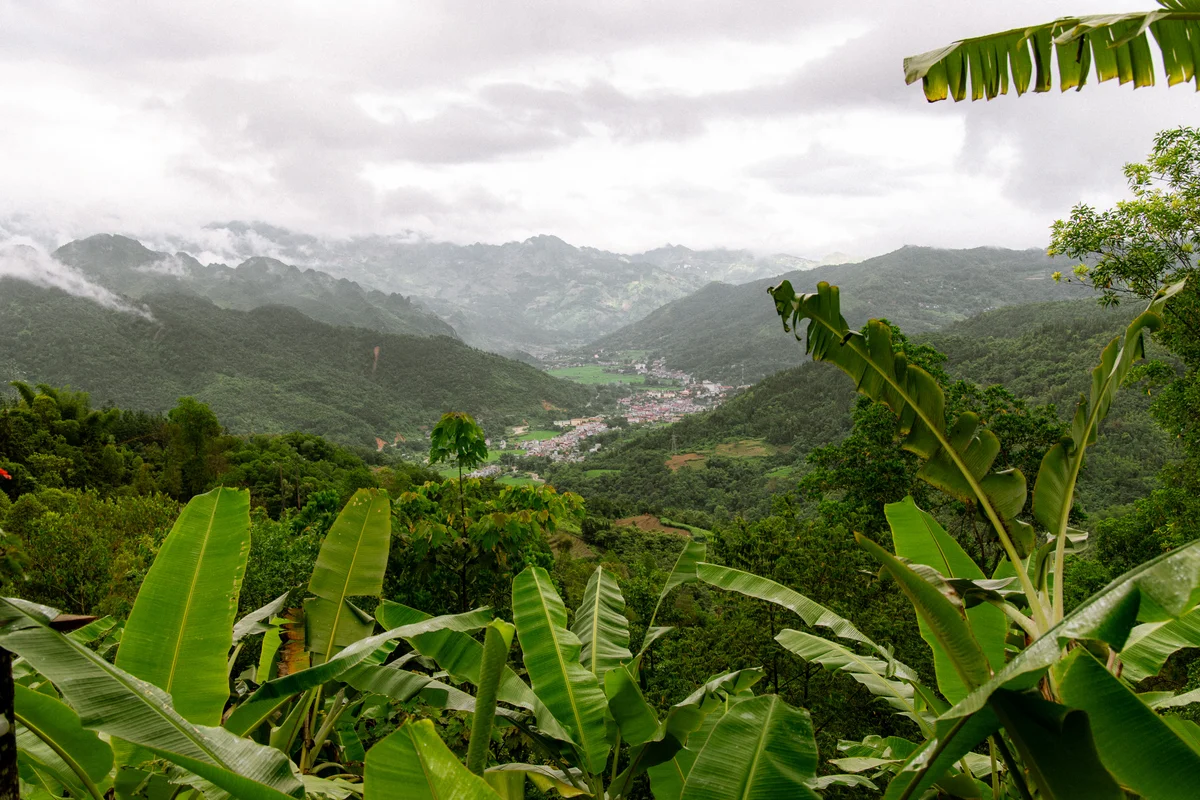
It’s why so many Ha Giang ethnic groups trust Bong Hostel—and why your experience feels natural instead of awkward.
 ⓒ Claire Thomas
FAQs About Culture on the Ha Giang Loop
Q. Is the Ha Giang Loop still cultural in 2026?
A. Yes—if you travel the right way. Choosing a culture-focussed route (like the Culture Tour) gives you a far more genuine experience.
Q. What makes Bong Hostel’s Culture Tour different from the classic Ha Giang Loop tour?
A. The Culture Tour avoids touristy hotspots and focuses on ethnic villages, local handicrafts, traditional food, and slower mountain roads. It’s designed for travellers who want meaning, not just motorbikes and viewpoints.
Q. Can tourists join local festivals in Ha Giang?
A. Yes—respectfully. Festivals like Hmong New Year, Gau Tao, and Long Tong often welcome visitors, but you should follow your guide’s instructions on behaviour, photography, and clothing.
The Culture Tour includes festival stops when dates align.
Q. Is the Culture Tour suitable for beginners or non-riders?
A. Absolutely. All riders are experienced Easy Riders, meaning you don’t need to ride yourself. You just sit back, enjoy the scenery, and experience village life without stress.
Q. What are the most cultural places to visit on the Ha Giang Loop?
A. The most meaningful cultural stops include Dong Van’s old quarter, Hmong villages around Sung La, Lo Lo villages near Meo Vac, Tay stilt villages in Quan Ba, and Red Dao communities in Nam Dam.
Q. How can I travel respectfully through Ha Giang’s ethnic villages?
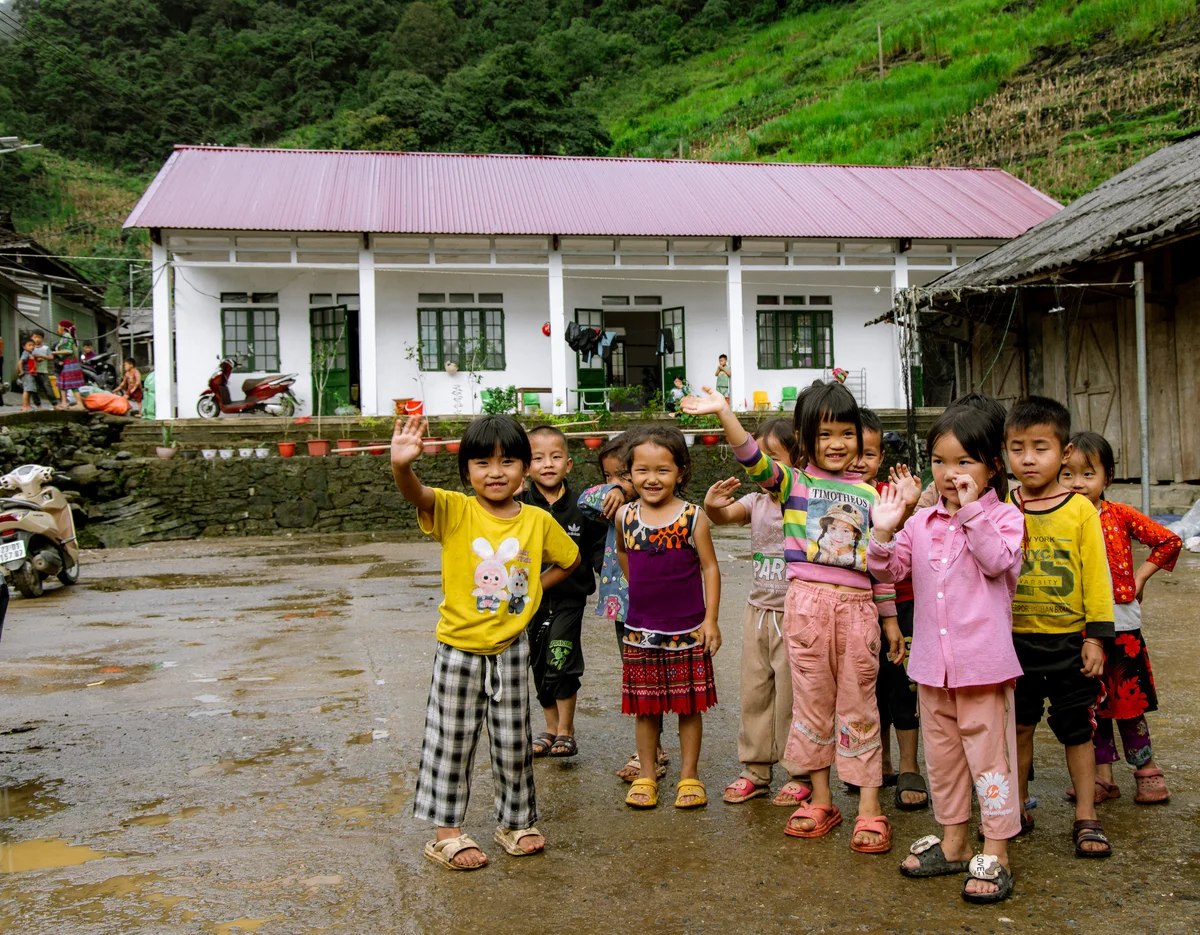
A. Follow local customs, ask before taking photos, dress modestly, never enter someone’s home uninvited, and avoid giving money or sweets to children.
Bong Hostel’s Culture Tour guides help you understand local Ha Giang etiquette so you leave a positive impact.
Q. Is the Ha Giang Loop safe in 2026?
A. The Ha Giang Loop is generally safe as long as you’re on a reputable guided tour and not riding yourself without experience or the correct licence.
The roads are improving every year, but conditions can still change quickly with weather, landslides, and roadworks.
Bong Hostel keeps safety front and centre:
Experienced, licensed Easy Riders who know the mountain roads.
Daily route checks so the team knows which sections are rough, closed, or risky.
A slower itinerary (compared to the classic tour) to reduce fatigue and avoid tight, dangerous corners.
Mandatory protective gear and strict “no risky behaviour” rules.
No tour can promise zero risk—it’s a mountain road—but choosing a structured, slower, culturally focused route is significantly safer than riding solo or joining a fast-paced group.
 ⓒ Claire Thomas
Final Word: The Ha Giang Loop Is Changing but You can Still Have an Authentic Experience
If you want to understand the real Ha Giang—not just the pretty scenery—you need to slow down, learn, listen, and explore respectfully.
Culture isn’t something you can see from a bike at 60 km/h. It's something you experience in villages, markets, homes, and workshops with the right people guiding you.
That’s why Bong Hostel’s Culture Tour exists.
It’s slower.
It’s deeper.
It’s more meaningful.
And honestly?
It’s the most authentic, respectful, eye-opening way to experience culture on the Ha Giang Loop in 2025–2026.
Ready to discover the real Ha Giang—not just the Instagram version?
Book the Culture Tour today and let Bong Hostel take you there!
About Faye Hilling
Travel writer and Vietnam explorer sharing authentic experiences and insider tips for discovering the beauty of Vietnam.